Sunday, September 17, 2023


 I'm playing with B&W conversion from the M10, using a different workflow than previously, and very different than with prior cameras. There will be some fine tuning, but the examples above are moving in the direction I want the look to go at least for now. Top, Richard Bellia during an opening at Tamarkin Camera in Chicago; below that, the ever dynamic mouth of Guthrie Creek as it flows into the Pacific.

Friday, September 8, 2023

50 Summicron


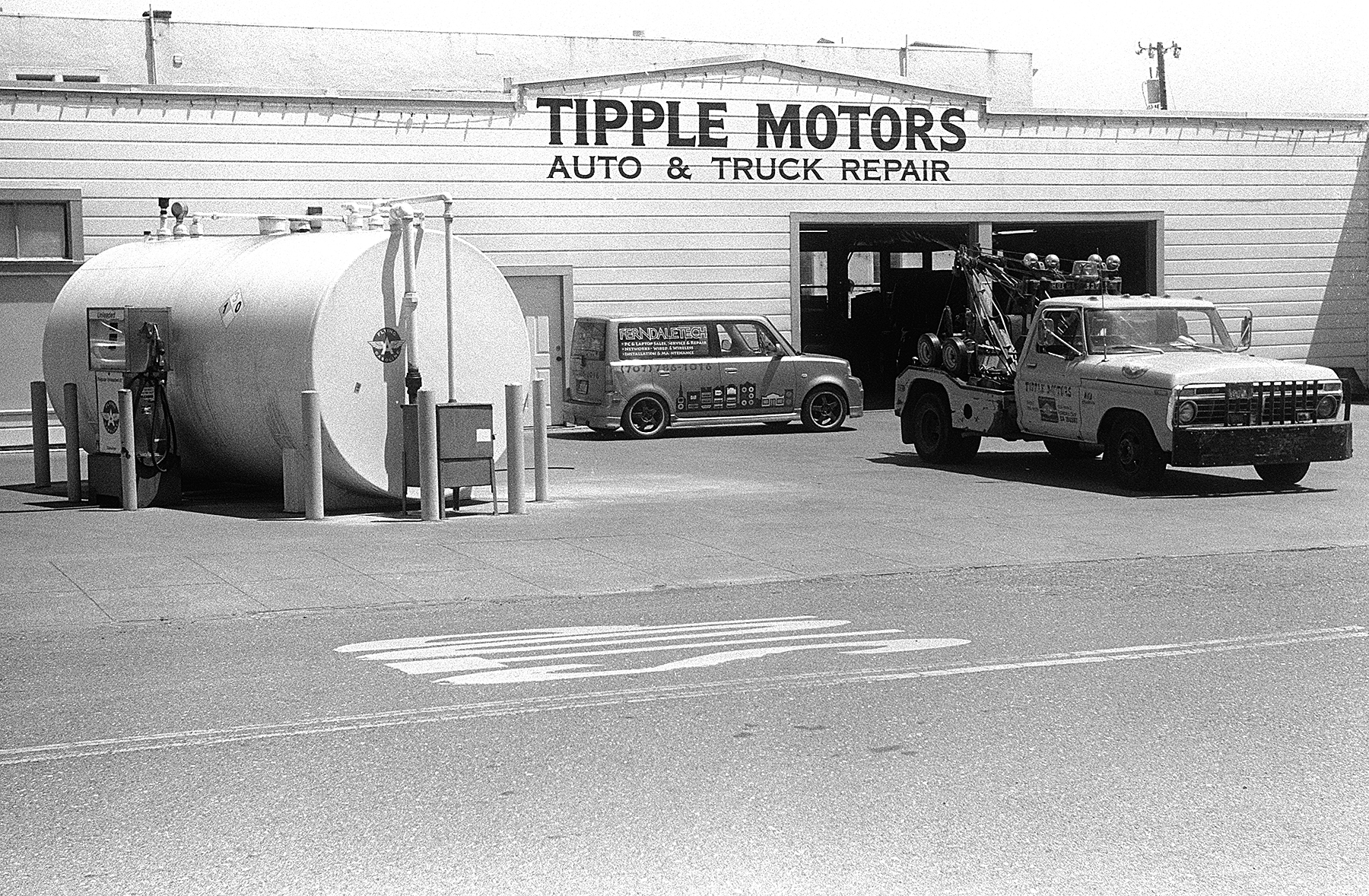
Last week I acquired another 50mm Summicron-M vIV. It's recent manufacture, six bit coded and with the built in lens hood. The image above is from tests the first couple of days, an informal shot at the local convenience store, shot wide open. Of course it's sharp, it's a Summicron, but here's the proof, shot on the M10.

I already had a 50 Summicron, technically also a vIV but in the earlier mount with the focus tab and Canadian built. I bought that lens at Calumet Photo in Chicago for something like $300, about 22 years ago when many were unloading used analog equipment. It was cosmetically very rough but I got lots of good use from it. Even with all the wear it would be easy to sell it for lots more than I paid for it.

Why another one? The built in hood and the coding are advantages for current use on the digital body. It's clean, near mint condition, with the box and leather pouch and caps. The price was fair, toward the lower end of the range I've seen for clean examples recently and I've yet to lose anything on a Leica lens so there's that. But really I just wanted a newer and cleaner one and the opportunity presented itself, and there's been some recent unexpected additional income. Although it's the same optical formula as my older one, this one seems very slightly sharper on the M10, I won't speculate about why.

I like to have one lens on an M body for extended intervals, and the plan is for this to be my primary lens for the M10. It won't come off very often. For landscape outings I'll normally include a 28 Elmarit-M aspherical in the bag, small and light and also six bit coded so no chance of forgetting to enter the lens if changing back and forth. The 50 Summilux pre-aspherical will continue to live on the M6 body because I really prefer the way the 'lux renders on film but am not as happy with it on digital.

Thursday, September 7, 2023

 Recently I started scanning old negatives, with an emphasis on selecting the very best images. Starting semi-randomly with 2007, of very roughly 4,000 negatives about 20 were scanned, and a few off those will drop out. Last night I went back to the beginning, looking through the really early stuff. I expect this will be mostly a winter project, something to do on rainy days and long nights. The system is in place now to facilitate that.

There's really nothing at that level to scan from the very earliest years. As a photojournalist it was a job, not fine art. Later I learned they aren't incompatible, but my early learning came mostly from the prior generation. Most of those guys were ex military photographers, ex photojournalists, guys from the Speed Graphic era of contrasty images and predictable subject matter. I was, literally, taught to put the emphasis on efficiency, to treat subjects as just one more assignment and not think too much beyond the essential technical stuff. Considering I was 15 when I sold my first photo, at first I didn't question that a whole lot. It was later, in my early 20s, that the rebellion came.

The first image that really stands out was taken in the summer of 1998. It was for a model composite, part of a series of shoots. I think the stage mom was in part trying to. set me up with her daughter, but there wasn't much interest on my part. Nice kid, pretty girl, not very interesting intellectually. She was a gymnast and dancer, relatively good muscle tone which meant, in 1978, she was a little ahead of her time. I was interested in that muscle tone, it was something different then and it lit beautifully, but she never made it past local sporting goods work as a model. Anyway there were a lot of technically competent images but with not a lot of spark to them. She wasn't real expressive and I hadn't learned to draw it out yet. The one really nice photo happened half by accident. I guess the location contributed and her pose had a dancer's grace, and she had a soft smile that appears to be natural. I think the framing between small trees on the left and right was an intentional part of the composition, what I didn't see til later was that the shrubs in the background, 20 feet behind her, when foreshortened with a short telephoto completed a darker circle. The model was centered in the lighter opening, and her extended fingertips just touched the darker edge of the outer circle which framed the border. At least I recognized right away on the negative that we had something special, and I made a bunch of prints of that one including some archival and selenium toned portfolio prints. The image also was one of three used on the composite.

So for those first years... from early 1971 through early 1981... just that one image stands out from all the rest, from probably a couple hundred thousand negatives run through multiple cameras on paid assignments plus a much smaller amount of personal work. That all changed in 1981.

What was new was that suddenly it wasn't just a job. When I took my first photos of the Chicago punk scene in December 1980, there was a new excitement, a new passion that hadn't been there before. It wasn't til early March that I did more photos, including my first band photos (Bauhaus and Da were on that couple of rolls from early March. A few photos from that show have been published and exhibited several times, and I selected two of them as standouts. Then in April, portraits of new friends in the alternative music scene. Three of them were special, two who became close friends and one I barely knew, and who died unexpectedly just months later. 

I've gotten only a little past that so far, there are a couple of July images selected to scan soon, and there will be several more in the balance of 1981 and 1982. Then it's going to skip some years, because after spring 1983 I burned out on the extreme intensity of the post-punk scene and mostly put the camera aside until the late 1990s. After that I was on a different path but one first inspired by those 1981-82 images, one that was much easier because of things first learned then. Part of the rejection of the materialistic values of the older generation of photographers (not all of them, because of course some of the earlier street and art photographers later became influences, but I hadn't found them yet) was very conscious and intentional... listen to the lyrics of the Joe Jackson song "Look Sharp" sometime, it resonated with some of us... although it went even deeper than I understood at the time.

Monday, September 4, 2023


 This was one of the first photos I took of an attractive young woman that wasn't part of a photojournalism assignment. It's an important photograph, because it was perhaps the first time I realized the power of the camera.

My first published photo ran on February 18, 1971 in the high school newspaper. Over the next year I'd stepped up to handle PR photography for the school, so my work was in pretty much every weekly paper in the Chicago north suburbs every week. I'd had images run in the big three already: The Tribune, Sun-Times, and Daily News. It was a job, and often a busy one. Most Monday mornings I'd drop 45 to 90 prints on my editors desk, nine copies of the selected image for each assignment.

I'd gotten to know most of the cheerleaders and pom-pon girls fairly well by this time, I'd learned that if I shot part of a roll of them at halftime when I had not much else going on, they'd buy prints of themselves. Monday I'd bring proof sheets to the cafeteria and quickly be mobbed by attractive young ladies.

In late spring 1972 this inevitably jumped up a level. I don't remember exactly how if happened, except that they approached me and asked to do photos. The first one was Robin, on May 18th. Pretty blond, not very expressive, a year older than me. I hadn't learned to handle backgrounds yet in this kind of work. Lots of distractions back there. In spite of that she liked the images. She had plans I didn't know about yet, after graduation a month or so later she got hired as a Playboy bunny in Lake Geneva.

The following week, on May 22nd, I did a set of photos with Sandi and Randi, both cheerleaders. That's Sandi in the image above. Those branches in the background could have been thrown more out of focus, but the backlighting worked better than the previous set. 

Sandi was easily the most popular girl in school that year. Homecoming queen, cheerleader, from a well known Park Ridge family, everyone knew her. She wanted photos, so after school we piled in her yellow 1967 Chevelle and drove to a park off Dee Road, people in other cars honking and waving all the way across town. We found relative calm in the park, and I got a handful of OK images on the one roll shot that day. 

I learned a few things that day. One was to pay more attention to the background, although I'd probably learned that in the aftermath of the shoot the prior week. Second was that the most popular girl in school was actually very nice and very easy to get along with, once one got through the hundreds of others vying for her attention. Third was that being a sort of competent photographer was one very good way to get her attention. She was a year ahead of me, and moved in different circles. If I hadn't taken those photos of her at games, if she hadn't bought some of them, I might never have met her.

June 1 was the first of three sets of photos with Rosanne, a pom-pon girl a year younger than me. This was a more organized sequence. The first few models had been for fun, this time I was getting paid by stage-mom. The first couple of shoots were to practice and get better acquainted. One was in a local park, the second was a day trip to Indiana Dunes. The third shoot was for real, composite photos to take to the Michigan Avenue agencies. We used her large white living room and I bounced a flash off the ceiling for a high-key look. My luck held, they were excellent images (by this time, a year and a half into high-volume pro photography, I'd had plenty of practice and was technically not bad on a good day, but still a little inconsistent at times. I hadn't made and learned from every possible mistake yet). A few large prints, stage-mom had the comps printed, and they headed for Michigan Avenue. They were hoping for some occasional work. Rosanne was signed exclusively by the first agency they walked into, and I saw her in Marshall Field's print ads for the next several years.

Ironically, the successes came from this first batch of models. I had plenty of models to work with for years after, and made a fair amount of money in the process, and it was way more fun than photographing high school football or basketball games. But few of these ever went anywhere with it, and none scored big the way Rosanne had until much later.

These thoughts came from scanning some old negatives yesterday and today, and on a whim after the main project was done I went back to the box of really old negatives that recently resurfaced. I have pretty much all of my negatives from December 1971 to present, and they're all organized and labeled... I know all the dates above because they're written on the envelopes/sheet protectors. Only the ones from the first less than a year of photojournalism work are missing. One thing about film, it's fairly easy to find things. I went through about 4,000 negatives in four binders from 2007 for what started this current effort, to find about 20 images and it took only a few hours to locate and scan. Not that simple with digital, and some of the earliest digital work is backed up on CD's that I can no longer read without going out and buying a CD reader. How long do CD's hold data, anyway? I guess one of these days we'll find out. The later backup drives are better, only one has failed so far to remind why redundant back-up is a really good idea.

Tuesday, August 1, 2023

New From Old


From the test roll run through the IIIb and 50 Elmar over the weekend. OK for an 85 year old camera body and a perhaps 75 year old lens. The sharpness actually surprised me a little. Avoid potential flare situations, and the old glass can hold its own. HP5 at EI 200, HC-110 dil H, full afternoon sun. 

Everything seems to work, so done with the IIIb for a while. Next step is to test some fairly economical film for general use in more modern gear, everything needed arrived today.

Monday, July 31, 2023

Leica M6TTL


 That's my well used M6TTL in the photo. Purchased new in 1999, it's created some of my best images over the years. It's usually paired with a 50mm Summilux as shown, a 1980s vintage pre-aspherical which has been very effective for wide open or low light photography; the 0.85x finder on this camera body has been a big help with that and makes focus easy.

This camera has had a lot of frames through it. There's some wear, which shows as silver on the zinc top plate. It has a little of the "bubbling" characteristic of the zinc top plate, and perhaps encouraged by the mild, humid winter rainy season conditions here on the coast and occasional fine salt spray from all those shoots at the dunes. It's not that noticeable and if anything is a good reminder that this is a camera to use, not to look pretty on a shelf. 

One of my few dislikes about the M4-2/M4-P/M6 series of bodies is the prominent white "Leica" on the front, I prefer to be a bit less obvious than that. So when the white began to scuff and flake off some years back, I used a toothpick to get the rest of it out of there. It's now much less obvious than the strongly lit photo would suggest, it's quite hard to see except up very close.

Using this body more often in recent weeks has reminded me that if necessary I could get by with just this one body and lens. The 50mm is my favorite on an M body and in the past I've gone possibly as long as two years at a time with this same lens mounted.

Anyway, I have four rolls of HP5+ ready to process, three of them from this camera and one a test in the IIIb. There's a bottle of HC-110 (what I prefer to use with HP5) on a FedEx truck on the way, supposedly to be delivered today, and also a few more rolls of film in that box.

Friday, July 28, 2023

Leica IIIb


 I'm just 27 frames into testing the recently acquired Leica IIIb. Not much, but the differences are obvious enough to perhaps allow a mini-review, a sort of first impressions post.

First some background: This isn't my first screw mount Leica. The first Leica I ever owned was a IIIf black dial acquired at a garage sale in about 1978 or 79. It was externally in mint condition, but had a few tiny pinholes in the shutter from being left on a closet shelf while wound since, probably, 1950-something. I was still a working photojournalist at the time and the IIIf wasn't a realistic option for that work, so it was a curiosity that I played with in the studio. Not long ago I chanced on a proof sheet of a roll shot through that camera, a studio series of Marlene who I did model comps for, and apparently shot the one additional roll for fun. Except for the few tiny pinholes, they're respectable images. There were a few other test rolls through that camera, but not long after someone offered four times what I'd paid for it. So I took the offer and put the money back into lenses for my pro rig which I could in turn use to earn more money. A logical choice at the time, although I did later wish I'd gotten that shutter fixed and had a little more time with that first Leica.

As a result of that earlier experience, it took only minutes to get the hang of the IIIb. 

The IIIb is in pretty good condition for an 85-year old camera. The top plate is excellent, just a few very minor scuffs, cleaner than most of my newer bodies. The baseplate has some larger scuffs, obvious but not bad compared to some older cameras. The leatherette appears to have been replaced, and there's a small tear in the front which may be from a botched install because it's otherwise pretty clean.  The camera has been apart, there are minor marks on the screws, and the shutter looks suspiciously clean and new. As far as I can tell everything works.

The 5cm f/3.5 collapsible Elmar is a little newer, post-war. Except for minor cleaning marks it's in good shape.

The camera is tiny, considerably smaller than an M-body. With the lens collapsed it easily slips into a jacket pocket and that's a tempting attraction. Add a wrist strap and it would be really easy to carry this anywhere.

For me the main limitation is the tiny rangefinder and viewfinder, after decades of M use they feel really small. The rangefinder seems to be accurate enough if one has time to focus carefully; the rangefinder image is at 1.5x so it's pretty easy to use when not rushed. The IIIb was the first model to move the viewfinder window right next to the rangefinder, so it's then pretty quick to shift the eye over just a bit, frame, and shoot. Except that for careful composition, that viewfinder is really tiny. It's also set up only for a 50mm lens, not an issue for me since that's my usual preferred focal length.

Most everything else is slow and deliberate. Trimming the longer film leader, loading carefully, winding and rewinding with knurled knobs, lifting the shutter speed dial to change settings, metering with a handheld meter (or sunny f/16 rule, on a bright day; I'm badly out of practice but long ago could estimate exposures in most conditions pretty accurately). Slow and deliberate is OK though, when the camera is for pure creative enjoyment.

My original intent was to run a couple of rolls of film through this and then put it on the shelf with only very rare use. It's kind of fun to play with so far though. It might come out to play a bit more often than originally planned, we'll see.

Thursday, July 27, 2023


 Last weekend I attended a few events at Tamarkin Camera in Chicago. A reception, a photo walk, and an annual sales event. 

I was able to participate in only the beginning of the photo walk, a brief in-store presentation and then perhaps the first 45 minutes of a much longer near north side walk. Still, it was fun. And it's important to keep photography fun. Street photography for me is more about seeing than about taking photos, although on a good day both happen.

The next day I acquired a Leica IIIb, about 1938 vintage. The price was right because it hadn't been CLA'd, although everything works. Cosmetically it's less than perfect but not bad considering the age. A test roll is in progress after a couple of Main Street strolls. I don't expect to actually use this camera very often, the old screw-mount Barnack's are capable of quality images but they're not fast... this is more about enjoying the craftsmanship of an earlier age.

I'm back home after an almost three week trip, which was mostly work related. All the photo activity was at the end, and I brought only a digital body, flying with film is a hassle. About 30 images have been through post-production today, some from the photo walk and some from a pair of open space preserves. I did learn a couple of new tricks on this trip, one of them about digital. 

Also today I ordered some more film developer and a few more rolls of film. This coming weekend there's a local opportunity for some photos, and I'm planning to bring the M6.

Friday, March 17, 2023

On Quality

 Every now and then I like to do a reset, go back to basics and discard accumulated bad habits, tighten up the work flow. I did that in 1997-98 when coming back to serious photography after a long break. I've made an effort recently to do this again, after a shorter and more partial break.

Much of the effort has gone into analog photography, in part because most of the point of going back to analog is to slow down and work the process, to previsualize. As usual, there was some reading involved. We never need to stop learning. In this case I worked through some things marginally relevant to what I do. One of the more useful references was mostly aimed at medium and large format film photography. I've never had the patience to stick with large format for very long, and medium format is too constraining for what I wish to do right now. So instead I'm taking some of the concepts and applying them to 35mm film. That requires tighter control, because any minor deviation from perfection shows on the small negative when it's enlarged or scanned.

Many of us were taught early that with B&W negative film, it's expose for the shadows and develop for the highlights. Taken to extremes, that becomes the zone system which is very valuable to understand, harder to implement with the more agile small camera except as intuitive background info. But then look at the vast majority of work posted on the internet, and most folks are rating film at one EI (usually underexposing) and usually doing one processing time. That's not going to give best results in the full range of lighting conditions.

I'm currently using three different ways of doing things depending on the type of available light. Some of the early results have been processed these past three months, on a couple of different types of film, and a very few printed. Just now I scanned a negative from two months ago. I just saw the payoff for the work.

I need to spend more time on this, scan a few more, later post a couple. I like what I'm seeing so far. Full tonal range, from black to white, subtle grays. Considering it's Tri-X in Rodinal, the grain is surprisingly pleasing.

Just when I was thinking of shooting more digital... this set of analog work needs to be taken to completion. I have some tentative plans for this, and at the moment it's looking promising.

Reviewing the Reviewer

 Today I stumbled on an online review of the Leica M10 which was less than completely positive. Most of the time when that happens it's someone who doesn't impress with their photographic knowledge, but this fellow seems to be a working pro. His opinion needs to be taken a little more seriously based on the better than average quality of his posted work. The way I'd sum it up is that given the type of work he does, I'm not surprised he prefers other platforms. That said, there are a couple of places where I think he at best fails to account for people who do things differently than he does, and at worst hasn't  stopped long enough to really think about a few things.

Which provides an opening for me to think through why I do what I do.

First, let's get the obvious out of the way. I completely agree with him that Leicas are absurdly overpriced. Now that I'm mostly retired, it's unlikely that I'll be buying any more of them.

Back when I began doing photography it was a little more complicated than that. As a working pro photojournalist from the age of 15, I couldn't afford a Leica then either. They wouldn't have worked for what I was doing at the time anyway. It was February 1971 when I started, with a borrowed Kodak Retina Reflex IV and three lenses for the first few months, slow and archaic and finicky. The Leica M4 was still in production, the M5 had just come out. The former wasn't an option because of the lack of a built in meter. The latter had not much size advantage over the other options of the time. More importantly, I was shooting a lot of sports. I needed longer lenses, and the rangefinder wasn't... still isn't... good at that. Thus I put my first earnings into a Nikkormat FTn and 50 and 135mm lenses. Those served me well, and I wore them out over the next two and a half years. I stayed in the Nikon ecosystem for a while, upgrading to an F2 and FM and better lenses, a different (slightly later) multi-coated 50 and 105 mostly.

About 1978 or so I got my first Leica, a IIIf found at a garage sale for an absurdly low price. I played with it in the studio, marveled at the build quality. The little early 1950s vintage 50mm f/3.5 was sharp, as long as one didn't shoot into the light. The early screw-mount body was slow to load, but in retrospect I could have used something like an M6 for the post-punk journalism I started doing about that time, if it existed yet. It didn't exist, not until 1986, three years after I was done with that work. So I used a Nikon. Years later I did shoot a few bands with an M6, and it was quite useful in that low-light up close photojournalism role.

For me, Leica happened in about 1998 or 99, when I was doing mostly street photography in Chicago and studio portraits. In that latter role it supplemented medium format. I'd shoot the big camera on a tripod with studio flash, and wanted something handheld for more spontaneous shots and the combination worked well. It was on the street though that the rangefinder was at its best.

Gradually as my photography moved out of the studio I developed a style rooted in the early photojournalism experience, a spontaneous approach of setting up a framework, letting the model play within that framework, and capturing whatever happened. Perhaps the timing was right, with Tri-X and Rodinal and gritty urban settings the look was successful for me at that time. I could have done it with other 35mm options, but the real answer is I enjoyed shooting with the Leica. The lack of a mirror let me get away with slower shutter speeds  in low light, the lenses were much better wide open than most of the competition and the shallow depth of field contributed to the look, and the ability to see outside the frame lines was well suited to the shooting style, allowing rapid adjustment. During these years I basically used two lenses, a 50mm Summilux and much less often a 35mm Summicron. Only once did I  try a longer lens, an ancient 135mm picked up on a whim for something like $65, and that for only a small part of one shoot.

The reviewers criticisms are more valid for digital, because Leica was at first late to that game. My M8 was an odd camera, sensitive into the infrared range, which sounds like a problem (and is for fashion work, where it can render some black fabrics as purple) but also gives a unique rendering of skin which can be pleasing. It was slow, with limited buffer, and erratic white balance. The 1.3x crop factor was strange, with a 35mm lens effectively acting like a 47mm lens. For some reason it also allowed remarkable print quality all the way up to 17x22 despite the relatively small sensor, by current standards. I used that camera right up until about a year and a half ago, when it was traded for the M10 and brought me more residual value than expected.

Until recently I haven't been shooting as much as several years back, and half of what I have shot has been on film. So the M10 hasn't really been pushed hard yet. The few serious shoots have gone well. The sets with Brooke and then with Chey produced excellent results. The M10 is faster, it's quieter (although still not as quite as the older film bodies), it's got a full frame sensor. It's the same size as an M6 TTL. That doesn't sound like much, but making the body a few mm thinner helps ergonomics tremendously, and also makes it joyful to go back and forth between film and digital bodies the same size and mounting the same set of lenses. I briefly thought the focus had wandered out of adjustment, but that turned out to be a lens, not the camera body. An old 50mm Summicron I'd bought 20 years ago for a very low price because it was cosmetically challenged finally gave out. Even Leica lenses aren't bullet proof it turns out, and I seriously abused this one as did whoever owned it before I did. It appears the rear element pair has started to separate. That's OK, I got my $300 out of that lens many times over. The only regret is that it balances a bit better on the digital body than the Summilux, and is a bit smaller, and I no longer really need that extra stop with improved modern low light sensor capability. So I'll be using it because it's there on the 'lux, not because it's essential.

I want to go after one criticism directly: The reviewer believes that rangefinders aren't accurate enough. I dispute that. Yes, they take a bit of practice. But today I pointed that 'lux at a test subject, focused quickly and shot a frame near close focus at f/1.4, and it was dead on. I can focus on a near eyelash just as quickly, and get it perfectly 95+% of the time, which is slightly better than I can do with auto focus. If he struggles with rangefinder focus, I'd say that's his lack of experience, not a lack of capability. And I'd argue that in really low light neither is easy, but the rangefinder is possible. One of those bands a few years ago, I got my shots in really poor light. A DSLR most of the time hunted without success for that same focus point, unable to get enough contrast to find it. One other factor: At age 17, I could manual focus my Nikon in any light, no problem. Today the eyes aren't as young, and manual focus on a ground glass takes a lot more care. The remaining options are auto focus, with or without EV, or a rangefinder. Any of those work.

The rest, I don't really disagree with him. If I were shooting weddings for pay as he does, I'd want a modern EV camera too. Most of the rest is personal preference. He doesn't mind over-complex menus, I do. I spent an entire career dealing with complexity, I don't need it in what I do for fun. He works 100 feet from his car, so a bag full of heavy gear and lenses is OK. I sometimes carry a camera 10 miles into rugged high elevation backcountry, so size and weight matter a lot to me. And so on.

Would I follow that path if starting out now? Probably not. I got in when pros were starting to dump analog gear and prices were more reasonable, and now they border on the absurd. My M8 was a demo at half price, and as a trade it covered a fair bit of the M10. All my lenses were acquired used. If I were a young photographer today, I might buy another IIIf as a toy, something to enjoy as a work of industrial art and use for fun and when not in a hurry, and then get something more cost effective for day to day work.

Saturday, August 27, 2022

Next exhibit

 I'm starting to print for the next exhibit, this one opens October 2nd at a small local venue. Most of the images came together quickly, for this one I'm drawing from the "Minima" series, these are what I call naked portraits, that is they're art nudes but with expression of emotion encouraged. It's all simple backgrounds, either in the studio or with careful composition on location. I'm using images from 2010 through 2022, up to 14 selected right now although I never rule out shooting a few more right up until the last couple of weeks.

It will be a mix of black & white, mostly from the earlier years of the series, and some more recent color work... probably alternating on the wall, although with only five printed right now (and needing to order some more paper) it's early.

Dasha and Tiana below, as examples.


Sunday, May 22, 2022

 I'm wanting to elaborate a little on some of the writing immediately below. If I'm rejecting the mallgoth culture, looking beyond the obvious commercialization of rebellion, why is that? What was different about the earlier experience?

The closest I can get quickly to explaining what we experienced in the post-punk years starts from the sublime. It's perhaps best known to us today from Edmund Burke's writings, but they're really quite tedious and he takes quite a long time to get to the point. Instead, I found the following: 

"Arthur Schopenhauer, in "The Will and the Representation" (1819), explored the fissure that lies at the heart of being, and envisaged a self that can in certain situations observe itself in the very act of confronting a fearful inner abyss, and by so doing attain a certain dark grandeur." 

The quote is from Simon Morley, editor of the book "The Sublime" and he's done us a favor because I can vouch that Schopenhauer isn't exactly a fast read, either.

In any case, that abyss is where we were perched in the early post-punk years, and it was a surprisingly wide-spread phenomenon among the folks I spent time with. We'd pretty much universally rejected middle class suburban values, torn the whole framework down, and in the process created our very own abyss. It took a little while to build a new framework. In my case, the void lasted from sometime in late 1978 into sometime in 1980, I think. For sure by April 1981 I'd pretty much worked through it, because by then I was helping a friend find the way. While there was not any one day that was before or after, a milestone was July 14, 1981. That night I met a young woman at Exit, I'm not really sure who picked up who, but we spent the night together and pretty much talked through the entire process of nihilist destruction followed by gradual rebuilding that we'd both been through. I only saw her once more after that plus a couple of phone conversations, but parts of that night are still very vivid memories. We shared a lot of interests, had read a lot of the same books, and it was very easy to talk about it.

That was four months after I'd seen Bauhaus play for the first time, and talked to Peter Murphy and Daniel Ash after the show. They had been, and continued to be, on the same trajectory, passing through a lot of the same interests as me... well documented in their lyrics. It was about a month before The Fall and the afterparty that went into the next morning, and for sure Mark E. Smith understood all this in his own irreverant way. It was more than three months before I met Siouxsie and drank beer with her, an hour or two isn't really enough to get to know someone but my sense is that she hadn't dived that deep into the abstract although I think a couple of others in the band had. Finally, it was a good two and a half years into listening to Joy Division and more than a year after Ian Curtis committed suicide, those songs were much more personal and emotional than they were about philosophical ideas and they never toured the US so I'll never know for sure. It certainly was a fitting soundtrack for the inner city experience of the time, and it appears that Manchester was in some ways like Chicago and other large cities.

The places are an important part of this narrative and possibly hard to comprehend for many today. These were still the cities of white flight, urban wastelands with numerous boarded up buildings and vacant lots and with gentrification barely started in a very few select neighborhoods. Violent crime rates were near all time highs, much higher than today. The US was deep in recession. We'd fled the suburbs, many of us, for bleak, gray but inexpensive inner city neighborhoods where most whites were afraid to go. Barely a week went by that we didn't hear of someone we knew being mugged, and most every month there was another overdose or suicide. The music, the writing, the art grew out of that chaos and anarchy. If some of that music wasn't very upbeat, that's because it reflected daily reality. Still, most were trying to find a way forward, not a way down. Many of us did find paths forward.

There were malls then, mostly in suburbia, but they had little or nothing that we wanted. It was essentially impossible to buy post-punk fashion there, mostly it was constructed by odds and ends, retro stuff from Goodwill stores or resale stores or scrounged and repurposed in some other way. A lot of us were very anti-materialist, and the concept of buying shiny new ready-made coffin shaped backpacks would have horrified us. It kind of still does.

It's been argued that goth goes back to the 60s or 70s, that the Velvet Underground and The Doors were precursers. There were references to "gothic" in a few places in the late 1970s. But it was probably 1982 or later before anything like what we now call goth began to come together in any organized way. Most of us, the first and second waves of post-punk, were gone by late '82 or early '83 and much larger, more mainstream crowds were beginning to descend on the clubs. Where post-punk was more often than not led by British bands, goth became much more American. The earliest examples maybe still had some things in common with us. Early Christian Death, at least through when I saw them (February 4, 1984, in San Francisco; with the classic Rozz Williams/Valor Kand/Gitane Demone/Constance Smith lineup), I'm pretty sure Rozz had read some of the same books that I had. After the surrealism of Catastrophe Ballet that began to drift. I didn't see 45 Grave til sometime later, and while they had a better sense of humor than they're often given credit for, that's about where my interest ends. After that it quickly seemed to become an angst-ridden fashion show. 

My goth experience was mostly later and as a photographer. I worked mostly with alternative models, and by 2003-2009 that often meant goth. Some of those young ladies were brilliant, a few of them understand much of what I've written above. I wasn't working with average people though. They poked fun at mallgoths more than I ever did. We sometimes wondered if it was possible to fake a counterculture look for the camera, and usually the consensus was no, putting on clothes and makeup did not equal authenticity and that it wasn't hard to tell.

That's enough for now. Perhaps I'll find a few photos to go with the stories.


 While on the goth theme: Acid PopTart, from the first of our two shoots so about 2005-ish, in Columbus Ohio. She was fashion editor of Gothic Beauty Magazine during this time. The shoot was done in a light drizzle, in the parking lot of a hotel while another model and photographer shot in one of the  rooms. I've published the whole story elsewhere, so won't go into detail here.

Goth


Today there was a local goth day. Photo op, right? Actually it was a bit of a challenge, as so often happens it was mostly mallgoths. Not a lot of authenticity, not surprising away from a major urban area. For at least some of these kids, their ideas come from the internet, not from personal experience. Most telling for me was that the one bookseller at the event had not a single serious work on the shelf, despite the fact that there's so much to work with in this genre it was all superficial fiction... and not even the best of that.

Perhaps I'm being too cynical, having been there at the beginning, before anyone beyond a very few journalists was calling it goth, and that only indirectly. Read the history, and I've seen most of the bands cited before they were popular. Later, I had opportunities to photograph several individuals central to the subculture. In many ways I was lucky. Now, so many years later, some of this feels disconnected from the earlier concepts. 

The images above: The first one, she was pretty much expressionless, vacant, sat in one place and hardly moved for 30 minutes while he did his best Rozz imitation (the real one was a whole lot more chrarismatic). So the image is of visual interest only, and the backlighting was tough. The second one is about the contrast; mom done up as goth, kid in Carhartt's. What will he be when he grows up?

Photographing the band was easy, having done so many of them it took only 8 or 10 images to call it done, and they were only marginally interesting. There was only one person on the floor right in front, everyone else was standing back; can't remember the last time that happened and it sure is easy to move that way. Some of the crafts on the tables offered interesting images, in some ways more interesting than most of the people. In this case the event served as useful practice, zone focusing and framing quickly, grabbing images before the subjects were fully aware... although no one seemed to object to being photographed, if I paused too long they over-posed so it worked way better to grab the images quickly.

Monday, May 2, 2022

Burlesque

 Earlier today, a friend told me she's in a new local burlesque troupe. From the couple of video clips and photos I've seen so far, it looks promising; that's a good thing. A couple months ago I went to see another local attempt and was sadly disappointed. There's a vacant niche here, for sure.

That got me thinking about the various interactions I've had with burlesque performers around the country, and the fascinating people I've met along the way. 

The first group I recall photographing was Hells Belles, in Detroit. That was in January 2005, it was 9 degrees F and we shot in an old restored downtown loft building near old Tiger Stadium in a half-abandoned neighborhood. It was part of a gothic-themed group shoot, organized by Racine Miller... then a law student, now a practicing attorney. She lined up the space, and recruited the majority of the models and did such a great job of it that I had to bring in three other photographers to help, we had over 20 models and three floors of space to work with.

Hells Belles were the first to arrive, all nine of them entering together. They dropped their things in the center of the large empty main room, and started to change and do makeup. One of the photographers tried to be polite and avert his eyes, and soon realized he was surrounded and there was no direction to look that didn't have a performer in some state of undress. It was obvious they'd been doing this for a while, they were soon ready and dispersing in small groups to create images. That was the day I met Sparkly Devil, who I'd shoot with twice more in Detroit after Hells Belles had long since broken up. We accidentally broke up a crack deal on the downtown streets, borrowed a shopping cart from a homeless guy, and made a mess in a clawfoot bathtub in a borrowed Victorian home in one of the then few gentrifying neighborhoods.

 Salome Slaughter was probably next, in Chicago. Again, we met at a larger shoot, this time with perhaps half a dozen people present; she was a friend of a friend. We turned her into a living statue, covered neck to toes in cling-wrap then gauze and plaster, in a duo with another model. The really amazing images happened when we cut her out, after 45 minutes of immobility the freedom resulted in a burst of enthusiastic and spontaneous movement and it was really easy to catch that energy. Again, that led to subsequent shoots. Salome has the distinction of being possibly the most extreme model I've worked with, as far as working conditions. Besides the plaster, we covered her in dried mud, worked in everything from 104 F and hot blowing wind in sand dunes to sub-freezing sleet and snow at Allerton Park, to wading a thigh deep marsh half a mile from the nearest trail. I was in hip boots, she was stark naked. It was actually a while til I got to see Salome perform on a burlesque stage, a few of us surprised her for a performance at Exit... which was outstanding. Considering her formal acting training, that didn't surprise me. That's her in the photo above, an evening shoot along the Chicago lakefront. In typical fashion, we walked under Lake Shore Drive from her nearby apartment and she wore only that one flimsy garment the entire time.

I met Michelle L'Amour in late spring 2010, when she performed (as Naked Girls Reading) at my exhibit opening at Gallery Provocateur in Chicago; her partner Franky Vivid was another of the artists exhibiting that night. It was pretty crowded, so a few of us went to see another performance a few weeks later when we didn't need to be "on" for the audience ourselves, when we could just enjoy. The photo above was taken after that performance, which was top-level. Two of her co-performers (Greta and Crimson) later participated in solo photo shoots. Take a look at https://michellelamour.com/about/ for more about Michelle; and that "The Most Naked Woman" video at the bottom of the page is a very worthwhile 11:54, I strongly encourage watching it.

Somewhere around that time, a little before or after, a group got together in Chicago and called themselves SS-XXX. I knew most of them long before then, had photographed several of them. The shows were OK the first time, repetitive after that. The attempt to be counterculture edgy turned out to be limiting. There's only so much one can do with fire dancing and a grinder on a metal plate throwing sparks. 

 Most of the performers were very good models though. I did a number of shoots with Natalya and they kept getting better. A shoot with Colleen in her apartment was very successful, quietly sophisticated. A shoot with Candy aka Alexandra on the streets and alleys around her Pilsen apartment covered a range of things, including a surpringly soft series against a fence with a Chicago PD car in the far distance, then finding recently expended 9mm casings in the alley right behind her place, then a slightly ominous looking set after nightfall on a bridge over the Chicago River, after a conversation best kept private. 

Curiously, another member of the group who I won't name booked a shoot, and then I turned her away after she tried to reschedule for the second time. I don't think she's accustomed to being told no, but I have a low tolerance for unreliability and in the end she took it well.

There were others, in some cases I don't recall any of the names. The shows themselves are challenging to photograph, rapid unpredictable movement best addressed with zone focusing, and poor or extreme lighting. When it works though it can result in strong images. Experience photographing dance and anticipating movement helps a lot. As a generality, the better performers are not only fun to watch on stage, they tend to make excellent creative collaborators in front of the camera. Movement can range from nuanced to assertive depending on the performers style, and communication is usually easy. So if this new local bunch does as well as I think they will, that's a positive thing.


Friday, April 29, 2022

What Might Be

 From a conversation this morning about recent landscape work: A few of the images are of ecological restoration sites that I've done design or permitting for; young alders along the restored Salt River, for example. One of the first steps in a restoration is understanding what was once there. In this case we were able to put part of it back, but not all of it.

Other images are of still degraded landscapes. In those cases, I guess I'm seeing what's there now, and what was once there, and what might be there again someday. It's a very intuitive thing, thinking in multiple and dynamic temporal scales... and not easy to explain.

After that I spent a few hours relaxing at the hot springs. Nice to unwind a little, and going two hours south meant it was 10 degrees warmer. No major revelations, but there was a chance to think about already defined things.

Tuesday, April 26, 2022


 This is my current analog loadout, about to go with me to get another cup of coffee. Lightweight and it barely fills a third of a Domke bag.

Changing to digital, the camera body would be about 3 oz heavier but no need for a handheld meter or film; I'd carry a charger and extra SD cards only for extended out of town travel. So probably a wash or just a bit heavier depending on the situation, but not enough to matter.

These days, I consider simple to be a good thing.

Tuesday, April 19, 2022

 Over the weekend I loaded a roll of medium format and shot half of it, intending to finish the rest of it sometime in the next few days. A lot of the reason is simply that I have a roll of Plux-X 120 sitting around  waiting to be processed, old enough that I don't even recall what's on it. May as well fill a tank, so it was an excuse to pull an old 500C out of the drawer where it usually lives. 

This quickly led to a realization: As much as I enjoy the quality that comes with the larger film negative, and as much fun as I had for years working in medium format, right now it doesn't fit my goals very well. I'm just happier with the small, unobtrusive 35mm rangefinder.

For now, that is. I tend to do something til I get bored with it and desire to break up the routine a little.  That may take a little while or a long while.

Sunday, April 17, 2022


Chey Alexandria, from the "feral" series. December 2021, on the Russian River in Mendocino County.

Saturday, April 16, 2022

Film

 Because it's been a while since I've processed film in quantity, I'm stepping back and making fresh decisions about which products to work with. That's because things change over time; the film stock, the chemistry, the nuances of my processing technique, my preferences for the end look. There's a great deal of misinformation on the internet, much of it from well-meaning newcomers who either read it somewhere else, or are doing their best to interpret their own results but not controlling for variables. For example, I've seen at least two recent statements that Tri X allegedly hadn't changed at all since introduction; one claimed to quote a post by a guy from Kodak (but with no link or citation). It's not even close to true, one look at my early work and more recent work makes that very obvious. Other sources claim multiple changes over time which is far more likely to be true. There was one big change that resulted in Kodak publishing new processing times (according to Wikipedia, this change was in 2007 and included allegedly finer grain and less silver; but they don't cite a source either. I do know that some of the new HC-110 times are not accurate, see the notes on Massive Dev Chart and my own experience backs that up).

So at the moment I have four rolls of Tri X, and two rolls of FP4 ready to proof and there are a couple of rolls of HP5 ready to process. All were done in Rodinal at 1:50 dilution and all with the same agitation and temperatures. I'll print a few examples, see what I like and don't like, and then shoot some more with whatever seems to be working for me. There are a few old rolls of 120 sitting around too, one-offs of each of several film types, great reason to run a couple more rolls through a medium format camera.

I probably won't settle on just one thing. Rodinal is a high acutance developer, which I like; that means the edges of the grain are less diffused, which gives the appearance of more grain and better sharpness although it's not really the same thing. That works for some subjects, not as much for others. So for those other things, I could use FP4, or I could just go to medium format... which I may very well try for the landscape work. It's a heavier rig but can be set up to be not too bulky. A tripod is a big advantage with larger cameras. I may not want to haul that on a 12-mile backcountry hike over rugged terrain, but close to the road it's perhaps worthwhile. 

I'll zero in pretty quickly on what I want to use. Things other than the look of the images may or may not factor in. 35mm Tri X is about $2.37 per roll more expensive than HP5. That doesn't matter for a few rolls, but over a hundred rolls it adds up. But then Tri X is available in 100 foot rolls for a better price, and I still have two of my old bulk loaders and would just need to buy a few new reloadable film cassettes at $2-something each and see if I can find the trimmer for the roll leader. So HP5 has a cost edge for small to medium quantities, but not for large quantities. Then there's the matter of whether one company is more deserving of support than another. I'm just beginning to look at that. Kodak is presumably still a fairly typical large publicly held corporation. At last check Harman (Ilford) was owned by a venture capitol firm. Either way, they're about making a profit and may or may not differ in how much they actually care about photography. That will take time to research and it's not a top priority this week. It's something I'll want to forget the moment I pick up a camera and go in search of images. There, it would just get in the way.

One thing that has become painfully clear doing just this little bit of information gathering: A lot of once commonplace film photography knowledge is rapidly being lost. Things that were once on my darkroom shelf, and that of most every other serious photographer, have in some cases become hard to find and often hidden behind internet misinformation. Young photographers, if you have opportunities to learn from older folks who learned when there was only film, go for it while you still can. Gramps may know things he's forgotten he knows, and will probably benefit from being around your creative energy. Maybe he'll even dust off that old camera.